Showing posts with label Russia. Show all posts

Thursday, 28 July 2022

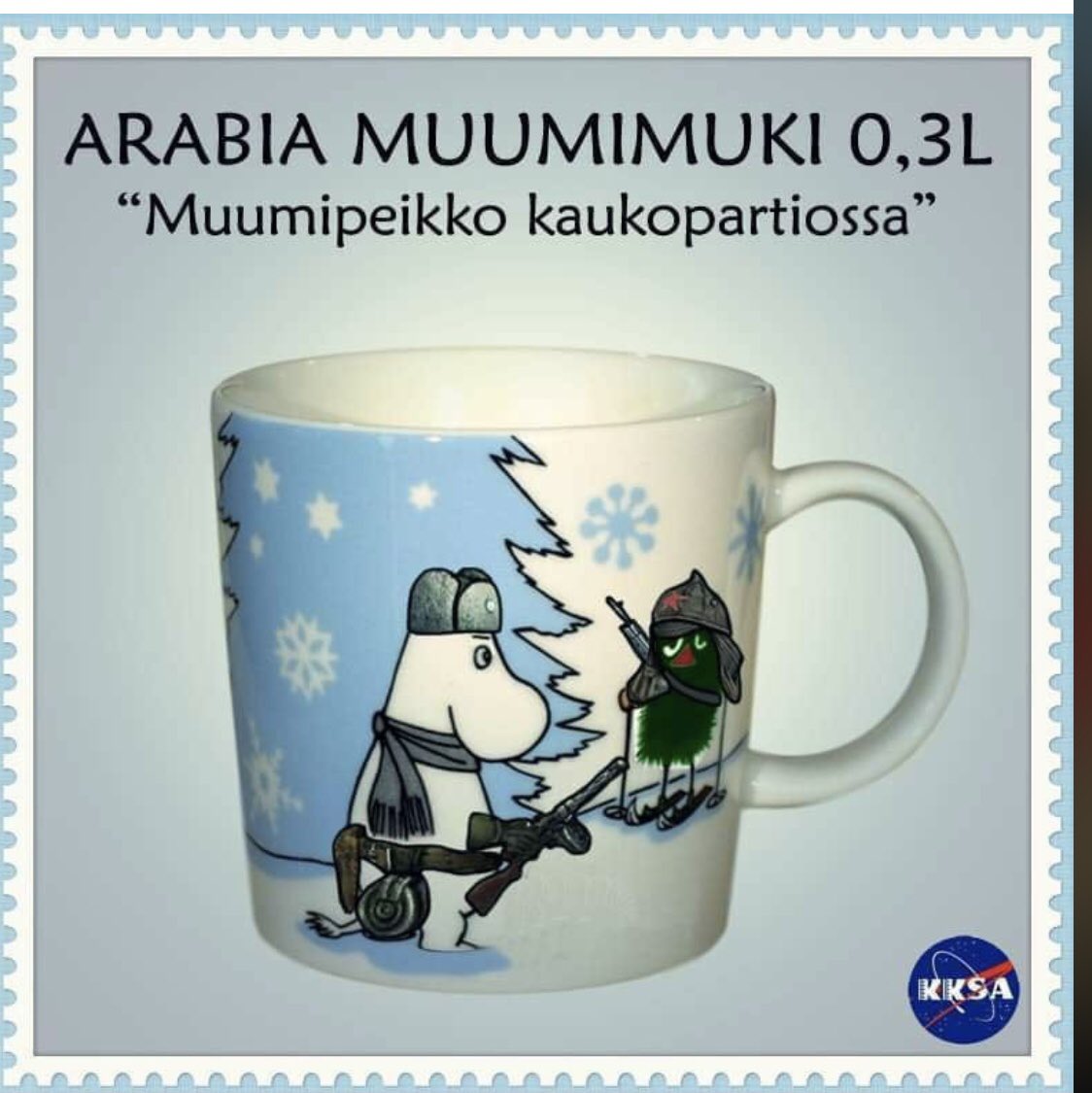
Moomin features in anti-Finland propaganda on Moscow streets


A Russian campaign against pending NATO members Finland and Sweden appears to be a continuation of similar propaganda seen in the Russian capital last May, when Astrid Lindgren was accused of having been a Nazi. 

https://yle.fi/news/3-12535510

The Finnish Internet has not been slow to come with some appropriately barbed responses, e.g. https://twitter.com/pmakela1/status/1552555790673788928


Thursday, 22 November 2018

Mandel'shtam


For the time being I've put my 1973 Mandel'shtam translations here.

Like Annensky, Mandel'shtam was spiritually and psychologically rooted in St Petersburg -- the city named Pietari in Finnish, and at one time in many respects a cultural and economic region of Finland.

Saturday, 29 June 2013

Putin oligarchs buy Hartwall Arena


Via Bloomberg:
Gennady Timchenko and two other billionaire acquaintances of President Vladimir Putin bought a stake in Jokerit ice hockey team, moving the club from Finland’s top league to Russia’s answer to the NHL.
Timchenko, Arkady Rotenberg and Boris Rotenberg will also buy Hartwall Areena in Helsinki, Jokerit’s home rink and Finland’s largest event venue, with a seating capacity of about 13,500, according to an e-mailed statement from the business partners’ Arena Events Oy venture. The price wasn’t disclosed.

Saturday, 25 May 2013

Pussy Riot in Finland

Via Yle: 


Two members of the Russian political performance group Pussy Riot are in Helsinki for this weekend's World Village Festival.
The women are in Finland to talk about the status of political prisoners in Russia and to plug their new book on human rights. It’s a manifesto entitled A Punk Prayer for Freedom of Speech.
They are to appear onstage at the free festival in Kaisaniemi Park at 11am Saturday with the popular Finnish female duo PMMP, who recently said they will end their career this year.
http://yle.fi/uutiset/pussy_riot_members_to_appear_at_helsinki_multicultural_fest/6658092

Update:

Weekend performances in Helsinki by two members of the Russian political performance group Riot Pussy, as well as scheduled interviews, have been cancelled. Concerns for their safety seem to have led to the cancellations.

http://yle.fi/uutiset/pussy_riot_members_cancel_appearances_whereabouts_unknown/6658931

Update: According to Yekaterina Samutsevich, interviewed by Hbl  in Moscow, a performance by the two Pussy Riot members at  the Maailma kylässä festival in Helsinki was never planned, as Pussy Riot does not perform outside Russia, and doesn't announce its performances in advance:

– Det stämmer att två av våra medlemmar har åkt till Finland. De skulle träffa stödtrupper och delta i utgivningen av en bok. Men det var aldrig meningen att de skulle stå på scen. Det måste vara ett missförstånd, säger Jekaterina Samtusevitj i en Hbl-intervju i Moskva.
Hon är mycket förvånad över att de finländska arrangörerna över huvud taget har tänkt sig att de båda Pussy Riot-medlemmarna skulle delta i ett evenemang som offentliggörs i förväg.
– Pussy Riot fungerar enligt helt andra regler. Vi meddelar aldrig i förväg var vi är och vad vi gör. Dessutom står vi enbart på scen i Ryssland för det är det här landet vi vill påverka och förändra. Jag förstår inte alls hur det här missförståndet kunde ha uppstått, säger Samutsevitj.
http://hbl.fi/nyheter/2013-05-25/454376/pussy-riot-upptrader-inte-utomlands

Thursday, 11 August 2011

Estonia gunman dead

Via RIA Novosti:
The attacker was identified as one Karen Drambyan, 57, a member of the United Leftist Party of Estonia, a group with strong links to the country’s Russian community.

Thursday, 28 July 2011

Breivik as author

From IslamRF.ru:
Всякий, кто когда-нибудь хоть немного занимался тем, что называют наукой, например, писал (а не скачивал) добротный реферат, понимает – создать подобное без определённой подготовки или помощи «компетентных друзей» невозможно. Есть основания сделать более радикальное предположение – манифест Брейвика писал не он.
Скорее всего, данную книгу, несущую лёгкий «закос» под любительство, а на самом деле сбитую весьма профессионально, делал хорошо подготовленный коллектив. Возможно, Брейвик её читал, возможно, какие-то фрагменты вставлял сам – но слишком многое сказано не им.
Но от его имени.
От имени массового убийцы и террориста, не дрожащей рукой расстрелявшего десятки ни в чём не повинных молодых людей, от имени психопата-нациста, ещё и похваляющегося своим поступком. 

http://islamrf.ru/news/politics/analytics/17008/

Thursday, 7 July 2011

Anarchy in the UKR

Serhiy Zhadan
Lev Hrytsyuk writes that contemporary Ukrainian writing is increasingly finding a home in Swedish - Anarchy in the UKR (2005) by the young Ukrainian poet and novelist Serhiy Zhadan (Zjadan in Swedish) made it to Russia's National Bestseller shortlist in 2008, and the novel pulls no punches, focusing as it does on some particularly violent episodes from 20th century Ukrainian history. The book is a result of the author's  travel through Ukraine to the places where the famous revolutionary and anarchist guerrilla warrior Nestor Makhno fought his battles. Between 1918 and 1921 Makhno was leader of the peasant army that fought against the German, Austrian and Belarusian counter-revolutionary forces in Ukraine. Zhadan's narrative style deliberately mimics the phrasings and moral contortions of Soviet journalism, and the entire venture seems to be a no-holds-barred polemic with Ukraine itself. 


Now Bonniers are set to publish the book in Nils Håkanson's Swedish translation. It's unclear whether an English version is planned - somehow one feels that it ought to be.


Friday, 21 January 2011

Russian land sales ban upsets Finland

On January 9, Russia’s President Medvedev signed a new decree which specifies border areas where foreign citizens are not allowed to purchase land. The areas include nearly all the regions of the Russian Federation bordering on Finland and Norway, all the way from Pechenga in northern Russia to the Gulf of Finland in the south (near Helsinki).

Finland has asked for an explanation of the new law, according to the Barents Observer, with foreign minister Alexander Stubb making an official representation to the Russian authorities, as quite a few Finns have already bought land in the areas that are now banned:
What will happen to those foreigners that already own land in this areas is highly uncertain. The Finnish Embassy in Moscow is examining the significance of the decree, reports Helsingin Sanomat.

- We stick to the principle of reciprocity as long as it is realistic and possible, says Alexander Stubb, interviewed by YLE.

- We’ll talk with Russian authorities about how this can be realised. If one can buy land here, then of course one should be able to buy land on the other side of the border as well, says Stubb.

Wednesday, 12 January 2011

Mistral and Sweden’s security

Ever since the announcement of the controversial Mistral arms deal between France and Russia on Christmas Eve 2010, the Swedish press has been publishing articles about the implications of the deal for Baltic security, and Sweden's security in particular. On January 7 Dagens Nyheter noted that concern about the sale of the Mistral assault ships to Russia was high because these helicopter carriers can be used for landing operations - presumably in the course of a military invasion. Bo Pellnäs, a Swedish defence analyst, commented that although the carriers will be based in Murmansk, they can be moved anywhere. This, against the background of reports that Russia is to increase its military expenditure by 60 percent, and last fall held its largest military exercise in the Baltic Sea since the 1980s, is giving rise to fears in Sweden that the country's security may  be compromised.

On January 5 a member of the Swedish parliament, Mikael Oscarsson, requested a statement from Foreign Minister Carl Bildt on what the deal means for the security of the Baltic Sea as a whole. Oscarsson also said that it was necessary to ask Russia about the purpose of the invasion capability, and that a tightening of Sweden's defence with Poland might be needed.

Now, in an interview published in the Swedish current affairs journal Världen idag (The World Today), Oscarsson says that his concerns are heightened by the internal political situation in Russia in the aftermath of the recent unsolved murders of journalists and the sentencing of Mikhail Khodorkovsky and Platon Lebedev.

"We need greater cooperation between Sweden, Poland and the Baltics, but we should also invite Russia to talks. I'm not one of those who say that the Russians are coming, but we cannot assume that anyone else will defend us. Therefore, we need to respond and ensure that we have a fleet that works."

In Poland, Polskie Radio has taken up Mikael Oscarsson's question, and there are reports that the military ties between Sweden and Poland may strengthen in response to Russia's investment in the new warships.

he U.S. think tank and news agency Stratfor's East Europe analyst Marko Papic says that just five days into the new year Mikael Oscarsson's question to Carl Bildt shows that the geopolitical map may be redrawn.

"The area of Sweden, Poland and Russia will be crucial for European security and political issues in 2011," he said in a statement.

Wednesday, 15 December 2010

WikiLeaks and extremism

This article in Reason magazine looks at some aspects of the WikiLeaks operation that seem to have been largely ignored by its supporters.

Wednesday, 15 September 2010

Reading matters

The interesting blog of Swedish military historian and defence analyst Lars Gyllenhaal continues to provide thought-provoking insights into aspects of Nordic and European security, past and present. with references to little-known and little-publicized historical, literary and other documentary sources. Among recent posts to the blog are:

  • a review of a book called If Germany Had Won --  53 Alternative Scenarios, with a chapter containing speculations on questions such as what might have happened if Sweden had been drawn into the Winter War of 1939-40, or had said no to Hitler in 1941.
  • a dissection and general Fisking of the 9/11 “Truth Movement”, with some unexpected words from Noam Chomsky.
  • an examination of Russia’s new defence policy in the light of a recent BBC report, and a look at one puzzling recent development.

Wednesday, 3 February 2010

St Petersburg

by Martin Enckell


in the city of the sphinxes, and the mothers,
in the city where death’s sphinx
rests in double majesty, and where the mothers
bear the bread home, out to the infinities of kneeling concrete,
where the children, the children increasingly often refuse to find their way home,
in this city of the mothers, and the sphinxes,
life writes its shadow script, as in fever,
as if an enormous tubercular angel had lain down to die
over the Neva’s delta, over the mirage of stone and the marsh river’s dark reflections,
over golden pinnacles and cupolas, over feverish gold, over façades doomed to beauty,
over palaces and portals where raw cold mist drifted in, over the trampled jewel
and the suburbs that mock, over the weighed-down marshes, and over weighed-down fates,
dizzying fates, and harrowed, that were scattered,
and are still scattered, into nothingness – in the city of the sphinxes, and the mothers.

***

she is old and bent, she begs, begs her way in
behind your eyes, by one of the passages down to the underworld,
and you implore her, implore her not to look like your mother,

night after night her youth rolls in over you,
night after night you approach requiems she will never write,
night after night she freezes into pictures you have no access to

***

in a white dress, by the window, in that light cool room,
she stands listening to the lingering echo
from a gate that has slammed shut, watching as through veils
the retinue of phantoms from the Marinsky, sylphides and future doomed
who silently stride across the Neva’s frail dark ice

***

dawn after dawn death stands
and polishes, caresses, caresses her doorknob,
dusk after dusk she locks you
in her gaze, a gaze that has swept over a whole century

***

and in a black low-cut dress, in the icy palace,
she dances then, all night long, her bridal waltz
with ghost after ghost, until she dances with the dawn
in whose eyes red spiders gleam, and she hears the iron gates
slam shut about the rooms, the rooms where the taiga and the tundra begin

***

night after night she freezes into the memories where death constantly divides,
night after night she approaches those she loved, over the Styx,
night after night she rolls a waxworks of torments over you,

she is one of the many, one of the dumb, she is all and each,
who stood and waited, for months and years, who stood and queued
and waited, outside Kresty, the martyrdom, the prison that sanctified the word.

***

life writes its corrosive shadow script over the most beautiful of cities,
as though an angel, an enormous tubercular angel, were trying to bless all that is doomed,
by letting itself be blessed down in the slowly sinking foundations of beauty,
while death, indifferent, apparently indifferent, watches death, in double majesty,
out of frozen stone, above the river, above the Styx – in the city of the mothers, in Saint Petersburg.


(Ny Tid / Kontur 4/98)

translated from Finland-Swedish by David McDuff

Thursday, 28 January 2010

A valley in the violence

In Hbl Philip Teir interviews Finnish-Estonian writer Sofi Oksanen, whose work is being published in Sweden and who is tipped to win this year's Nordic Council Literature Prize. Excerpt:
After Sofi Oksanen appeared on a Danish TV culture show and depicted the Finnish people as depressive and uncommunicative she heard criticism from many quarters. The fact that Finland has two brutal school shootings behind it and a bleak set of statistics relating to violence was no excuse. This is stuff one shouldn't talk about to foreign journalists... "It isn't sanitary," was the view of Finland's Professor Laura Kolbe.

"I've learned that while many people don't mind as long as you stick to writing books and winning prizes ... as soon as you say something like this, the reaction is "Get back to Russia, you Estonian whore," says Oksanen, who grew up in Jyväskylä with a father who is Finnish and a mother who is Estonian.

See also: Knocking Finland

Saturday, 19 December 2009

Levels Two to Five

Not strictly a Nordic item, perhaps, but Anthony Briggs has some interesting reflections on judging this year's Rossica Prize. Incidentally, a literal translation of the piece's title is: "God deliver us from judges like these." Money quote:
There is no circle in Dante’s Inferno to accommodate this kind of punishment for a life conducted in sin; those of us who have tormented others with words will probably have to move in somewhere on Levels Two to Five alongside other incontinents: the gluttons, misers and spendthrifts, the wrathful and sullen. (Plenty of friends there, then, and no shortage of translators).

Tuesday, 13 October 2009

Finland as a question, Russia as reply

Next March the Finnish publisher WSOY will release an unfinished work by the poet, author and publisher Paavo Haavikko, who died last year at the age of 77. The book bears the slightly odd title Suomi kysymyksessä, vastauksena Venäjä (literally "Finland in question, Russia in reply"), and is an attempt to trace and analyse the historical relations between Finland and Russia throughout the centuries, concentrating on the genetic myths and memories, and the hatred and hostility that developed in the conversation between the two countries, influenced by official propaganda on both sides.

Sunday, 20 September 2009

Echoes of the Arctic Sea

Writing à propos of Thomas Berglund's recent article in Svenska Dagbladet on the occasion of the 200th anniversary of the Treaty of Fredrikshamn, at which Sweden had to sign away its territories east of the Gulf of Bothnia to Imperial Russia (Berglund calls it a "national trauma"), Tobias Ljungvall looks back on some of the less well-known aspects of the Finnish independence struggle. He discusses the role of a later independence activist, the writer and revolutionary Konni Zilliacus the elder (1855-1924), whose life, Tobias says, "ought to merit a film or television series". Zilliacus, the author of such venerable but probably now little-read works as Det revolutionära Ryssland, Från ofärdstid och ofärdsår, Korruptionen i Ryssland, and Moskoviter och finnar, was actively involved in the so-called "Grafton Affair" , which involved an unsuccessful attempt to smuggle arms to the Finnish resistance by ship along the Baltic in 1905.

The comments to Tobias' post make rather sad reading: someone has posted part of Silmien Välliin, a Finnish wartime song from 1942, which talks of "shooting the Russians between the eyes", and another (Russian?) commenter has responded with what purports to be a Russian translation of the song's words, but is in fact a totally different text accusing Finns of racism and Nazi sympathies.
See also: The Landmark Year

Saturday, 8 August 2009

The mailbox

Hannu Marttila, writing about Joseph Brodsky's grave in Venice:

Leaning against the gravestone is an ordinary steel mailbox, of the familiar kind that lines the roadsides and suburban streets of Finland, though without an address on the side. Behind the box a dozen lead pencils wait.

- - - - -

On top of the beautifully curving marble slab someone has placed two red granite stones that have been polished by water until they are round. They are probably a reminder of the Gulf of Finland shore, which Brodsky loved.

I would have brought a basket of mushrooms. If Orpheus could entice his dead spouse from Hades by his playing, Brodsky could probably be induced to return by the smell of mushroom stew. After all, we managed to persuade him to come to Finland at mushroom-picking time in 1988, in the midst of all his Nobel rush.

And remember, Iosif or Joseph, waterbuses 41 and 42 will take you from the cemetery back to town. Next time I visit I will put a waterbus ticket in your mailbox.

Thursday, 2 July 2009

Two strands in Nordic literature

Still following the thread that was prompted by the discussion of Greenlandic literature, and particularly by the examples and reflections contained in Karen Langgård's essay, I wonder whether the questions connected with the aspiration towards nationhood may not lie at the centre of the debate on Nordic literature itself.

The uncertainty about national role and identity has had a twofold effect on Nordic consciousness and culture. On the one hand, it has led to a preoccupation among Nordic authors and thinkers with issues of identity, society and community, sometimes expressed in religious terms, but more rooted in the ideas of Hegel, Marx and nineteenth century German sociology. On the other hand, much as in Russia, it has often inspired a reaction against those essentially collectivist concerns, leading to the birth of a kind of ethical universalism that derives from the ideals of the German enlightenment, in particular those expressed in the philosophy of Kant.

Just as the Russian classic authors - Gogol, Tolstoy, Dostoyevsky, Turgenev - go beyond the limitations of the social and historical confusion of their age to create an essentially moral universe in which time and matter play a secondary though none the less vivid role, so the work of the great names of Nordic literature - Kierkegaard, Claussen, Blixen, Ibsen, Strindberg - inhabits a realm in which the ethical and existential concerns of the individual are transformed into a portrayal of all human life, perceived in the eye of the absolute. Perhaps this is the other side of the "religious" coin.

The two strands, the social-communal and the universal, are still present in Nordic literature today, although - just as in Russia during the twentieth century - the former has gained the upper hand. When an author like Pia Tafdrup describes herself not as a Danish poet, but a poet who happens to write in Danish, she is to some extent allying herself with the Nordic universalist tradition, though also with literary universalism everywhere, and with writers who fought the collectivist tyranny (the examples of Mandelstam, Tsvetayeva and Brodsky come to mind). And those Nordic authors who continue to seek their subjects and inspiration in the analysis of social and political issues are harking back to the uncertain murk of Herder, Hegel and nineteenth century nationalism, with its twentieth century consequences.

This is probably a gross oversimplification, but I think it's one that might be worth further inquiry.

Wednesday, 20 May 2009

Vikings in Chechnya

At Prague Watchdog, German Sadulayev speculates (in a way that's at once both serious and humorous) about the possible presence of the Vikings in 11th century Chechnya, and draws some striking historical analogies.