From what people who knew her have said, Inga-Britt Wik seems to have been a loner with feminist convictions. A strange combination, perhaps. And as a young woman she moved from the provinces to the capital to get an education. These qualities are hinted at in these poems:
*
When the telephone rings
she flicks back her hair
and answers: no he’s not at home
and stares absent-mindedly
into space as if listening.
Yes, she’ll be the same one
to come back to
with his nearness like torrents
in the blood and she is the same one
dully clattering the washing-up for
the world rests on necessities.
What the blood leaves as traces
in the mouth must be washed away daily.
The dark furrow of trust. Creased brow.
While ironing she kneads life
the heat emptying her mind.
Trapped in
the indifferent disaffection of the afternoon
she wanders through the backyards of memory
lays out their faces,
one by one, till she has discovered
another one she could have loved in order to
let the sudden fire quietly
deny its origins.
(From the collection: Fönstret, 1958)
*
PS from Mother Human Being
I’m the one that lives with you all
the one that is born with a feeling for the dark rooms
where life begins
you do all you can to get rid of me
lift me up onto pedestals
where I must stand and listen
it’s lonely to be worshipped
one is shut out
from ordinary life
one can’t take part in your
simple and impetuous arrangements
one is too “good” for that
I can take part in your festive days
but you are kidding yourselves
it’s not me standing there on your
pedestals – it’s only a childish copy
I myself am out there in life
with you all
it’s there you can find me
(From the collection Jack’s café, 1980)
*
Whether it was early or late
I don’t remember.
We ate grilled trout in a wide open
world,
read Runeberg’s Idylls and Epigrams
to our coffee.
It seemed like the first time,
the resurrection poems speak about.
(From the collection: Skriver I dagarnas book, 2008)
These three poems come from a selection of ten, published in the literary magazine Horisont, 1/2009.
Translated from Swedish by Eric Dickens
Showing posts with label Inga-Britt Wik. Show all posts
Showing posts with label Inga-Britt Wik. Show all posts
Friday, 17 April 2009

Horisont 1/2009 - Inga-Britt Wik
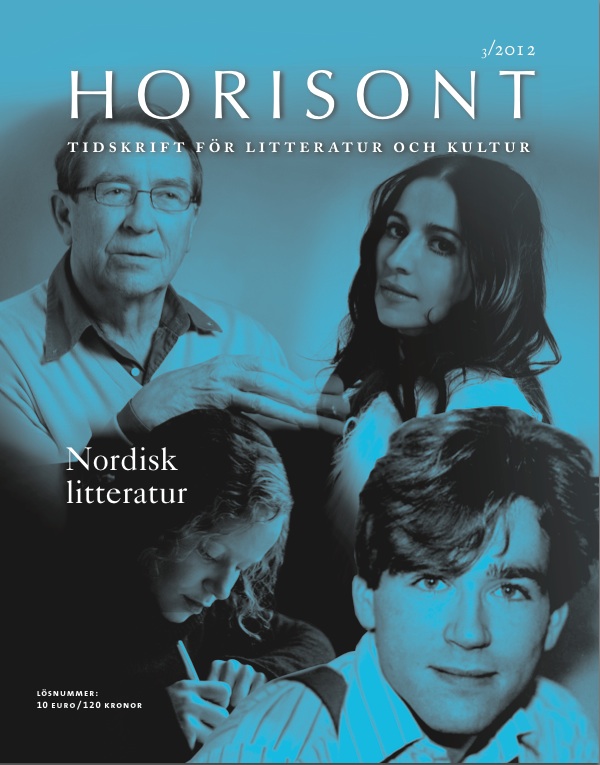
The Ostrobothnian-based literary magazine Horisont has been around for decades, and still now in 2009 four further issues are planned after the first, which appeared recently. The theme of this issue is the Finland-Swedish poet Inga-Britt Wik who died last year. To give some idea who she was, I will translate the small biographical note from Horisont:
Inga-Britt Wik was born 18th December 1930 in Vasa. Both parents were brought up in the countryside, her father as the son of fisherfolk and smallholders from the island of Replot in the Vasa archipelago. Her mother was the daughter of a so-called "America widow" from Vörå. (An America widow was similar to a "grass widow", except that the husband was living in America.) Her father Arvid Wik worked as a customs officer during the 1930s, while her mother ran a small grocer's shop. During the war years, her father was called up, and spent time in the army first in Hangö then, during the Continuation War, in the Karelian Isthmus.
Inga-Britt Wik moved to Helsinki in 1950, and graduated in philosophy in 1956. In 2003 she returned to Vasa. She was principally a poet, and all her books appeared with the Schildts publishing house in Helsinki. Key themes in her poetry are various women's rôles, love, feminism, the environment, but the basic tone of her poetry reflects nature.
She was married to the author and film producer Jörn Donner from 1954 to 1962, later marrying the children's psychiatrist Gustav Amnell. The marriage and separation from Donner caused her to write the books Ingen lycklig kärlek (No Happy Love; 1988) and Bryta upp (Breaking Up; 1996). She was also the editor of poetry by Solveig von Schoultz and Lars Huldén.
I shall be translating a couple of her poems from this issue of Horisont later in a new thread.
Inga-Britt Wik was born 18th December 1930 in Vasa. Both parents were brought up in the countryside, her father as the son of fisherfolk and smallholders from the island of Replot in the Vasa archipelago. Her mother was the daughter of a so-called "America widow" from Vörå. (An America widow was similar to a "grass widow", except that the husband was living in America.) Her father Arvid Wik worked as a customs officer during the 1930s, while her mother ran a small grocer's shop. During the war years, her father was called up, and spent time in the army first in Hangö then, during the Continuation War, in the Karelian Isthmus.
Inga-Britt Wik moved to Helsinki in 1950, and graduated in philosophy in 1956. In 2003 she returned to Vasa. She was principally a poet, and all her books appeared with the Schildts publishing house in Helsinki. Key themes in her poetry are various women's rôles, love, feminism, the environment, but the basic tone of her poetry reflects nature.
She was married to the author and film producer Jörn Donner from 1954 to 1962, later marrying the children's psychiatrist Gustav Amnell. The marriage and separation from Donner caused her to write the books Ingen lycklig kärlek (No Happy Love; 1988) and Bryta upp (Breaking Up; 1996). She was also the editor of poetry by Solveig von Schoultz and Lars Huldén.
I shall be translating a couple of her poems from this issue of Horisont later in a new thread.
Subscribe to:
Posts (Atom)